




Chevrolet Maintenance Schedule: Complete Service Guide by Mileage
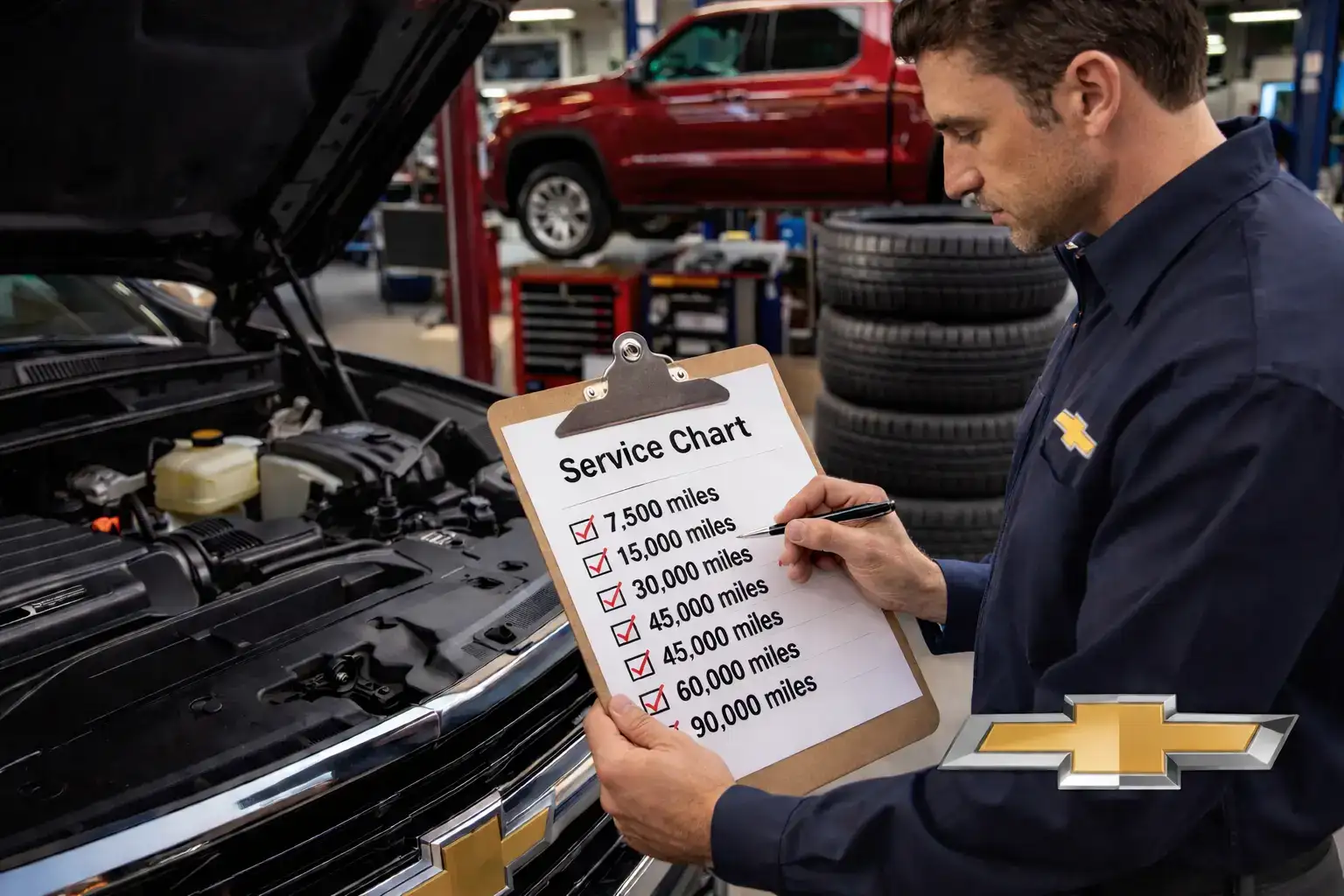
Your Chevrolet came with a maintenance schedule for a reason: the engineers who built it determined exactly when specific components need attention to keep the vehicle performing safely and reliably over its full-service life. Following that schedule is not overcautious, it is the most direct path to avoiding expensive repairs, preserving your vehicle’s warranty coverage, and maintaining the resale value that makes your next vehicle purchase more financially sound. Ignoring it is how a $150 oil change eventually becomes a $4,500 engine repair.
This guide covers the complete Chevrolet maintenance schedule by mileage interval, from the first service visit through 100,000 miles and beyond. It also addresses the specific maintenance considerations that matter for Florida drivers in St. Cloud and the greater Orlando area, considerations that differ meaningfully from the national standard advice. Every service interval and recommendation in this guide is based on GM guidelines, verified Chevrolet dealer service data, and industry-standard maintenance practices. Where Florida-specific factors apply, we address them directly.
Why Following the Maintenance Schedule Matters
Modern Chevrolet vehicles are engineered with much tighter tolerances, more sophisticated engine management systems, and more complex drivetrains than vehicles from even ten years ago. The 2.7L TurboMax engine in the current Silverado and Equinox, for example, uses variable valve timing, direct injection, and active cylinder management, systems that depend on clean, properly viscous oil to function correctly. Extending oil changes beyond the manufacturer’s recommended interval does not save money; it accelerates wear on precision components that cost significantly more to repair than the oil change would have cost to perform.
The maintenance schedule also serves as a structured inspection framework. At each service interval, certified technicians inspect systems beyond the specific items being replaced, they check brake pad thickness, tire wear patterns, fluid conditions, belts, lights, and other components that may be approaching service needs. Catching a brake pad at 3mm before it reaches metal-to-metal contact costs approximately $250. Replacing rotors that were damaged by metal-to-metal braking costs $500 to $800. The maintenance visit pays for itself in the problems it identifies before they become expensive failures.
5,000-Mile Service
The 5,000-mile service interval is where consistent maintenance begins. Modern Chevrolet vehicles use the Oil Life Monitoring System (OLMS) to calculate oil change timing based on actual driving conditions, not a fixed mileage interval. Under typical St. Cloud commuting conditions (mixed highway and stop-and-go), the OLMS typically triggers a change recommendation between 7,500 and 10,000 miles for full synthetic oil. However, vehicles operating under more severe conditions, frequent short trips under 10 miles, extended idling in Florida heat, heavy towing, or dusty environments, will see shorter intervals recommended by the monitor.
Regardless of when the OLMS triggers, the 5,000-mile mark is the standard starting point for tire rotation on most Chevrolet vehicles. Tire rotation at this interval promotes even wear across all four tires, which extends their service life, maintains balanced handling, and, critically for Florida roads, ensures consistent wet-weather traction on all four corners. Florida’s afternoon thunderstorms make even tire wear a safety consideration, not just a cost one. At this same visit, a multi-point inspection covers fluid levels, lighting, wiper blade condition, and a visual inspection of brake components.
15,000-Mile Service
The 15,000-mile interval builds on the 5,000-mile services and adds several additional items that require attention by this mileage point. In addition to the oil and filter change and tire rotation, this interval includes inspection and replacement of the cabin air filter if needed, inspection of the brake system including pad thickness and rotor condition, and replacement of the engine air filter if driving conditions have been dusty. For St. Cloud and Central Florida drivers, the engine air filter inspection at this interval matters: central Florida’s combination of pollen, construction dust, and summer organic debris can clog filters faster than in cleaner-air environments.
The 15,000-mile visit is also the appropriate time for the first comprehensive fluid-level check and top-off cycle, power steering fluid, brake fluid, coolant, transmission fluid, and windshield washer fluid are all inspected. Brake fluid, in particular, absorbs moisture over time, which lowers its boiling point and can compromise braking performance under heavy use. Florida’s hot climate accelerates moisture absorption in brake fluid relative to cooler-climate environments, making this inspection particularly relevant for Central Florida owners.
30,000-Mile Service
The 30,000-mile service is the first major scheduled maintenance milestone, and it involves a more comprehensive set of inspections and potential replacements than the earlier intervals. In addition to oil and filter change and tire rotation, the 30,000-mile service typically includes replacement of the engine air filter, inspection of the fuel system including fuel lines and injectors, inspection of the exhaust system for leaks, a thorough brake inspection including measurement of rotor thickness, and a steering and suspension inspection covering tie rods, ball joints, shocks or struts, and suspension bushings.
For Chevrolet trucks, Silverado, Colorado, the 30,000-mile interval is also appropriate for the first transmission fluid inspection. For vehicles operating under severe duty (regular towing, frequent heavy loads, stop-and-go commercial use), GM recommends transmission fluid service at 45,000 miles rather than the 97,500-mile interval specified for normal driving. Central Florida Silverado and Colorado owners who regularly tow boats, trailers, or commercial equipment should treat their vehicles as severe-duty and plan transmission service accordingly. The cost difference between a proactive 45,000-mile fluid change and a reactive out-of-warranty transmission repair is substantial.
45,000-Mile Service
The 45,000-mile service interval adds several items to the standard oil change and tire rotation package. The most important is the engine air filter replacement, by 45,000 miles, most vehicles are due for a new filter regardless of visual condition, as filter efficiency degrades with use even before a filter appears obviously dirty. Spark plug inspection is recommended at this interval for most gasoline engines, with replacement depending on the type of plugs and the engine’s operating history. Modern Chevrolet iridium spark plugs typically last 100,000 miles under normal conditions, but inspection confirms their condition.
For vehicles equipped with 4WD, Silverado, Sierra, Colorado, Tahoe, Suburban, Equinox with AWD, Yukon, and Yukon XL, the 45,000-mile service includes transfer case fluid inspection and replacement if needed. The transfer case fluid lubricates the 4WD mechanism and, under severe-duty use, can degrade before the 97,500-mile normal-use interval. Central Florida buyers who regularly use 4WD for off-road driving, towing on loose surfaces, or navigating flooded roads during Florida’s rainy season should have the transfer case fluid inspected at this interval. The brake fluid change that should have been evaluated at 30,000 miles is addressed definitively at 45,000 miles, fresh brake fluid is the standard recommendation at this mileage.
60,000-Mile Service
The 60,000-mile service represents the most comprehensive maintenance event in a Chevrolet vehicle’s first half of its service life. In addition to all routine items, this interval involves spark plug replacement on vehicles that use standard (non-iridium) plugs, a thorough inspection or replacement of the serpentine drive belt and any accessory belts, coolant system inspection including pressure testing, and replacement of the coolant if it is the original fill. On 4WD and AWD vehicles, front and rear differential fluid inspection and potential replacement is appropriate at this interval.
Battery testing is a critical component of the 60,000-mile service that is often overlooked. Most vehicle batteries last three to five years, by 60,000 miles, a vehicle driven at average annual mileage is typically four-plus years old, placing it in the replacement range for the original battery. Florida’s heat is particularly hard on batteries: high ambient temperatures accelerate internal battery degradation, and many Florida-based vehicles see battery failure earlier than the national average. A battery test at 60,000 miles identifies a battery approaching end of life before it leaves you stranded in a Central Florida parking lot in August.
75,000 to 100,000-Mile Service
The 75,000 to 100,000-mile range is where comprehensive maintenance becomes particularly important for long-term vehicle health and where deferred maintenance most commonly manifests as expensive problems. At 75,000 miles, all previous interval items are revisited, with particular attention to the cooling system, brakes, and any worn chassis components identified in the 30,000 and 45,000-mile suspension inspections. On high-mileage vehicles, coolant flush and replacement is standard practice regardless of the specific intervals elapsed.
The 97,500-mile point is where GM’s normal-use recommendation for automatic transmission fluid change falls for most current Chevrolet and GMC vehicles. This service involves draining and replacing the transmission fluid, often including a filter change where accessible, a preventive investment that significantly extends transmission life on a vehicle approaching six-figure mileage. By 100,000 miles, a comprehensive under-vehicle inspection covering wheel bearings, brake hardware, suspension, and exhaust is appropriate. A Chevrolet or GMC that reaches 100,000 miles with a complete, documented service history and no deferred maintenance is genuinely in strong condition for continued service to 200,000 miles and beyond with continued adherence to the schedule.
Chevy Maintenance Costs: What to Expect
Understanding the cost structure of Chevrolet maintenance helps owners budget accurately and avoid the surprise of an unexpectedly large service bill. Most routine service visits at a GM-certified service center involve a combination of labor and parts, oil and filter at 5,000 to 10,000-mile intervals, tire rotation at each visit, and periodic filter and fluid replacements. The following estimates reflect service center pricing in the St. Cloud and Central Florida market; actual prices vary and should be confirmed when scheduling.
Routine oil changes run approximately $70 to $120 for full synthetic oil, depending on oil capacity and the vehicle’s engine. Tire rotations run approximately $50 to $80. The 30,000-mile comprehensive service, which includes the brake inspection, air filter, and multiple fluid checks in addition to routine items, typically runs $150 to $300 depending on which items require replacement. Spark plug replacement at 100,000 miles runs approximately $200 to $400 for a full set. Transmission fluid service runs approximately $200 to $350. Battery replacement runs approximately $200 to $350 including installation. These costs are significantly lower than the repair costs that result from skipping these services, maintaining a consistent schedule is the most financially sound approach to vehicle ownership.
| Service Item | Typical Interval | Estimated Cost (St. Cloud Area) |
| Oil change (full synthetic, most gas engines) | 7,500-10,000 mi (OLMS guided) | $70-$120 |
| Oil change (Duramax diesel) | ~7,500 mi | $100-$140 |
| Tire rotation | Every oil change / 5,000-7,500 mi | $50-$80 |
| Engine air filter | 15,000-30,000 mi | $40-$70 |
| Cabin air filter | 15,000-25,000 mi | $40-$70 |
| Brake pads (front axle) | 30,000-60,000 mi | $250-$450 |
| Brake fluid change | Every 45,000 mi | $100-$150 |
| Spark plugs (iridium) | ~100,000 mi | $200-$400 |
| Transmission fluid | 45,000 mi severe / 97,500 mi normal | $200-$350 |
| Coolant flush | 5 years or 150,000 mi | $150-$250 |
| Battery replacement | 3-5 years | $200-$350 |
Maintenance Tips for Florida Drivers
Florida’s climate creates specific vehicle maintenance demands that differ from national average recommendations. St. Cloud and Central Florida drivers face year-round heat, high humidity, intense summer UV exposure, seasonal flooding, and the unique combination of highway salt air from coastal proximity and agricultural dust from the region’s farming areas. These conditions accelerate certain types of wear and create maintenance priorities that cold-climate or dry-climate guidance does not fully address.
The most important Florida-specific maintenance discipline is consistent A/C system attention. Florida drivers run air conditioning for nine to ten months of the year, the system accumulates far more annual use hours than the same vehicle in a northern climate. The A/C compressor, condenser, and evaporator are under sustained load in Central Florida in ways that northern service guides do not fully account for. Having the A/C system inspected and recharged if needed at your 30,000-mile service is a proactive investment that prevents the $700-$1,200 compressor replacement that becomes likely when the system is run with degraded refrigerant charge.
Heat & Humidity Impact on Your Vehicle
High ambient temperature is the single most significant accelerant of vehicle component wear in Florida. Heat degrades rubber components, belts, hoses, seals, tires, faster than temperate climates. Tire pressure varies with temperature: Florida’s morning-to-afternoon temperature swings of 20 to 30 degrees can shift tire pressure by 3 to 5 PSI, which affects tire wear, fuel economy, and handling. Checking tire pressure monthly, not just at service intervals, and maintaining manufacturer-specified pressure is a Florida-specific maintenance habit worth developing.
Battery degradation is accelerated by heat rather than cold, which is counterintuitive for drivers who have lived in northern climates. Heat causes battery fluid evaporation and internal structural breakdown that shortens service life. Florida batteries typically last three to four years rather than the four to five-year national average. Having your battery tested annually, not just every two to three years, is appropriate for Central Florida vehicles. Our service team at Starling Chevrolet performs battery load testing as part of routine multi-point inspections.
Hurricane Season Vehicle Prep
Florida’s hurricane season runs June through November, and preparing your vehicle for severe weather conditions involves specific maintenance attention. Wiper blade replacement is particularly important before hurricane season, Florida’s year-round UV exposure degrades wiper blades faster than in northern climates, and a wiper blade that appears functional in light rain may fail during a tropical squall with several inches of rainfall per hour. Check and replace wiper blades before the June 1 season start.
Tire condition is the other hurricane-season priority. Tires with less than 4/32-inch tread depth perform significantly worse in heavy rain, hydroplaning risk increases substantially below this threshold. Florida’s warm roads accelerate tire wear, and a set of tires that begins the year with adequate tread may approach replacement range by the time the most active part of hurricane season arrives in August and September. The 32nd of an inch rule is easy to check: insert a quarter into the tread groove with Washington’s head down. If you can see the top of his head, the tires are at 4/32-inch or less and should be replaced before the rainy season peaks. Our service team can measure tread depth precisely at any routine service visit.
Schedule Service at Starling Chevrolet
Starling Chevrolet’s service department in St. Cloud serves Chevrolet and GMC owners across Osceola County and the greater Orlando area. Our GM-certified technicians use genuine GM parts and GM-specified fluids and procedures, the standard that maintains warranty coverage and ensures that maintenance work meets the specifications your vehicle was engineered to receive. We stock high-turn parts for all current Chevrolet and GMC vehicles, which means most routine maintenance items are completed the same day without delays waiting for parts arrival.
Scheduling your maintenance appointments in advance, not waiting until the OLMS warning light appears, is the most effective maintenance strategy. Routine visits allow our technicians to identify developing issues before they become urgent, which gives you time to plan and budget for repairs rather than responding to failures. Online scheduling is available at our website, or you can call our service department directly. We look forward to keeping your Chevrolet or GMC on the road for the long haul.
Conclusion
Chevrolet’s maintenance schedule is a roadmap for getting the most out of your vehicle over its full service life. It is built on engineering data about how components wear, how fluids degrade, and how systems interact, not on arbitrary intervals or service-department revenue goals. Following it consistently is the most cost-effective vehicle ownership strategy available, and it is particularly important for Florida drivers who face accelerated wear conditions that make proactive maintenance even more valuable than the national average suggests.
At Starling Chevrolet in St. Cloud, our service department is built around supporting that maintenance schedule for every Chevrolet and GMC vehicle in the Central Florida area. Whether you need a routine oil change and tire rotation, a 60,000-mile comprehensive service, a battery replacement before hurricane season, or anything else on the schedule, our certified technicians are ready to take care of it.

0 comment(s) so far on Chevrolet Maintenance Schedule: Complete Service Guide by Mileage