




Chevy Financing 101: Should You Lease or Buy Your Next Chevy?
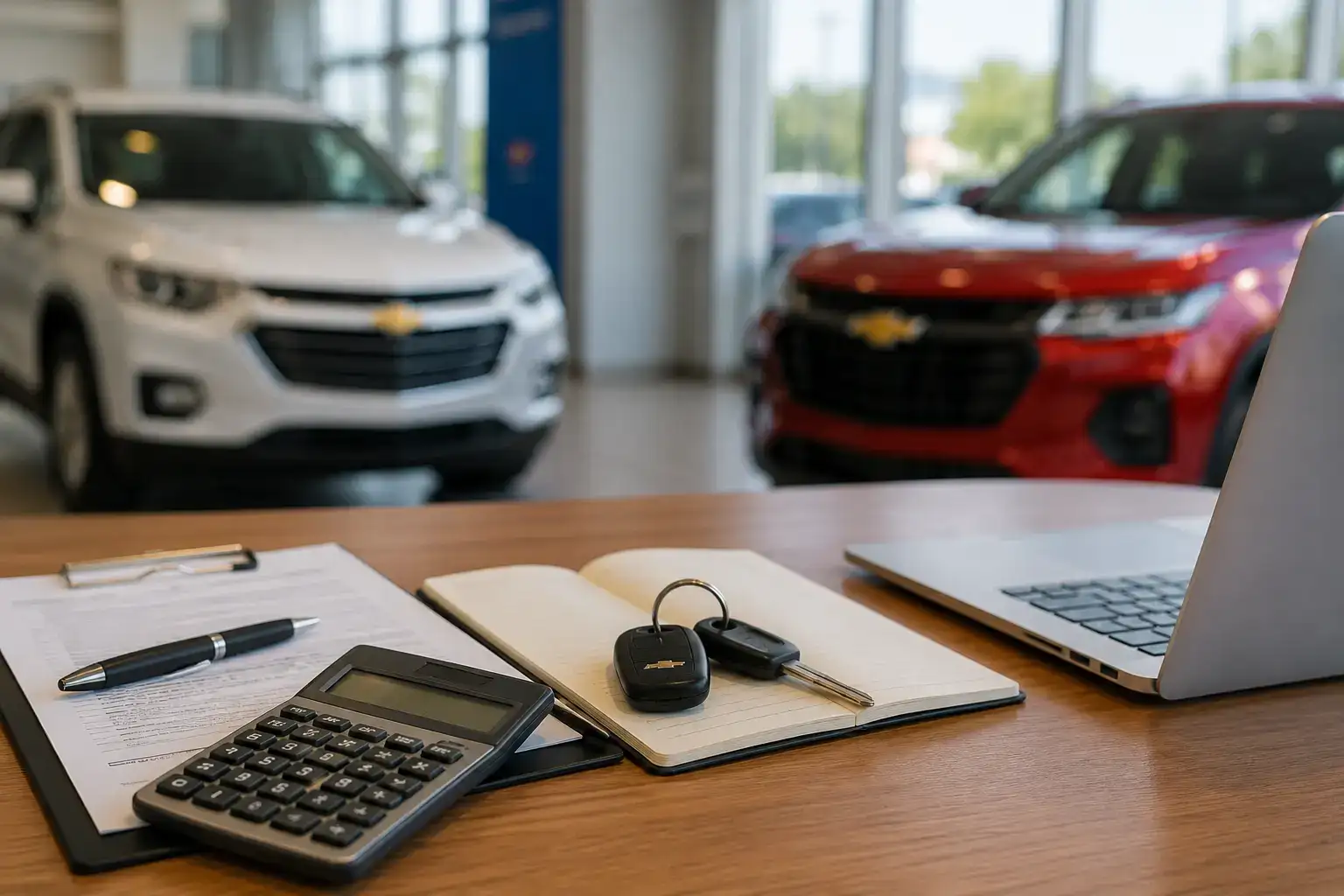
The lease-versus-buy question is the most common financing conversation at Starling Chevrolet in St. Cloud, and it is also the one where the answer most directly depends on the specific buyer’s situation rather than any universal rule. Neither leasing nor buying is the correct answer for every buyer, each structure is correct for a specific set of priorities, driving habits, and financial circumstances. The mistake most buyers make is applying one answer universally rather than evaluating which structure fits their actual situation.
This guide provides the honest framework for making the lease-versus-buy decision on a Chevrolet in 2026, covering the core financial difference between the two structures, when each one makes sense, the specific Florida driving considerations that affect the comparison, how your credit score changes what you qualify for, and how GM Financial’s programs and current incentives fit into the decision.
Leasing vs. Buying: The Core Difference
Leasing and buying a vehicle are fundamentally different financial transactions, not just different payment structures for the same thing. Buying, whether through cash or financing, transfers ownership of the vehicle to you. Every dollar you pay beyond the interest on a loan builds equity in an asset you own. When you sell or trade the vehicle, you receive its market value and the difference above any remaining loan balance is yours. Buying is a vehicle ownership transaction. Leasing is a vehicle usage transaction. When you lease, you are paying for the right to use the vehicle for a defined period and mileage, typically 24, 36, or 39 months and 10,000 to 15,000 miles per year.
At the end of the lease, you return the vehicle and own nothing. You have paid for the vehicle’s depreciation during your use period, the financing cost on that depreciation, plus fees and taxes, but you have not built equity and do not receive anything at lease end unless you purchase the vehicle at the pre-determined residual value. The monthly payment difference between leasing and buying the same vehicle is typically $100 to $300 per month in favor of leasing, because the lease payment covers only the portion of the vehicle’s value you use (depreciation) rather than the vehicle’s full value. This payment advantage is the primary appeal of leasing, and the primary reason it is the wrong choice for some buyers even when the payment is attractive.
When Leasing a Chevy Makes Sense
Leasing is the financially and practically correct choice for a specific buyer profile. Buyers who match this profile consistently get more value from leasing than from buying. The core profile: you drive under 12,000 to 15,000 miles annually, you prefer to drive a new or near-new vehicle every 2 to 3 years, the vehicle will be used in a way that keeps it in clean condition at lease end, you do not need to modify or customize the vehicle, and you value the lower monthly payment and the predictable cost structure that a lease provides over the ownership benefits of buying.
Lower Monthly Payments and Newer Vehicles More Often
The lease’s monthly payment advantage is real and meaningful for budget-constrained buyers or buyers who value cash flow flexibility. A 2026 Chevy Equinox with a $32,000 capitalized cost financed over 48 months at 7 percent APR produces a monthly payment of approximately $765. The same vehicle leased at typical current terms, 36 months, 10,000 miles per year, with current GM Financial residual and money factor, produces a monthly payment of approximately $350 to $425 depending on current program terms. The $340 to $415 monthly difference, over a 36-month lease, amounts to approximately $12,000 to $15,000 in lower payments. For buyers who would use that monthly difference to fund a higher-priority financial goal, paying down other debt, building an emergency fund, or redirecting toward a savings goal, the lease’s cash flow benefit is a meaningful real advantage. The vehicle refresh cycle is the other lease advantage: at the end of a 36-month lease, you return the vehicle and enter a new vehicle in the latest generation, with the most current safety technology, the most current infotainment, and the coverage of a new vehicle warranty. Buyers who enjoy the new vehicle experience and would otherwise feel compelled to trade every 2 to 3 years can structure that preference as a lease without the financial penalties that frequent buying and selling of financed vehicles creates.
Mileage Limits and What Florida Drivers Should Watch
Mileage is the lease variable that most commonly creates problems for buyers who did not account for it accurately when signing. Most standard leases set a 10,000 or 12,000-mile annual limit. Driving above the limit produces a per-mile overage charge at lease end, typically $0.20 to $0.25 per mile for Chevy leases through GM Financial. A buyer who drives 16,000 miles annually on a 10,000-mile annual lease accumulates 6,000 overage miles per year over a 36-month lease, 18,000 total overage miles, at $0.25 per mile: $4,500 in overage charges at lease return. This charge eliminates most or all of the monthly payment advantage that made the lease appealing. Florida-specific consideration: Central Florida drivers often drive more miles than they expect, particularly during the tourist season when I-4 and US-192 congestion extends commute times and distances. A St. Cloud buyer who commutes 30 miles each way to Orlando on I-4 covers approximately 15,000 miles annually in commuting alone before any personal driving. This buyer is not a 10,000 or 12,000-mile annual lease candidate. Selecting a 15,000-mile annual lease limit increases the monthly payment but eliminates the overage risk. Our finance team at Starling Chevrolet can help calculate the right mileage limit for your specific driving pattern before any lease is signed.
When Buying a Chevy Makes Sense
Buying, through financing or cash, is the correct choice for a different buyer profile that is equally well-defined and equally common in the St. Cloud market. The core buying profile: you drive more than 12,000 to 15,000 miles annually, you keep vehicles for more than 3 years, you want to modify or customize the vehicle for your use, you tow or use the vehicle in ways that could produce normal wear that a lease’s condition standards would flag as excess, or you specifically value building equity toward a future vehicle purchase.
Building Equity and No Mileage Restrictions
The equity argument for buying is the most straightforward: every payment above the interest portion of a financed loan builds ownership stake in an asset that has market value. A buyer who finances a Silverado 1500 for 48 months and pays it off owns a vehicle worth $28,000 to $35,000 depending on condition and mileage, an asset that can be applied as equity toward a future purchase, sold privately for the full market value, or simply kept with a zero monthly payment for the duration of continued useful life. The mileage freedom argument is equally straightforward: bought vehicles have no mileage limit. A contractor who drives 30,000 miles annually, or a family whose road trip and recreational driving pushes well above 15,000 miles, faces no financial penalty for that usage under a purchase. The vehicle is theirs to drive as much as they need without tracking mileage against a limit. For Central Florida buyers whose work, recreation, and travel patterns put them consistently above 15,000 miles annually: buying is the financially rational choice regardless of the monthly payment differential.
How Your Credit Score Affects Your Rate
Credit score is the most significant individual factor in determining the interest rate you will pay on a financed vehicle, and the difference between a strong credit score and a marginal one is measurable in total interest paid over the loan term. On a $40,000 vehicle financed over 48 months, the difference between an interest rate of 5 percent (strong credit, Tier 1) and 12 percent (moderate credit, Tier 3) is approximately $6,800 in additional total interest paid. The monthly payment difference is approximately $140, significant but not dramatic. The total interest difference over the loan term is the more important figure.
GM Financial uses a tiered credit system to determine financing rates, with the best rates available to Tier 1 buyers (typically 720+ credit score) and progressively higher rates for lower tiers. A buyer with a 680 credit score may qualify for financing but at a rate that meaningfully increases total vehicle cost. For buyers whose credit score is in the moderate range, two strategies improve the financing outcome: a larger down payment reduces the financed principal, reducing the total interest paid regardless of rate; and improving the credit score before applying by paying down revolving credit balances, resolving any outstanding collections, and ensuring no new credit applications are made in the 60 days before the vehicle application.
GM Financial Programs and Current Chevy Incentives
GM Financial is Chevrolet’s captive finance arm, the lender that provides financing and lease programs specifically designed for Chevrolet vehicles. GM Financial’s programs are updated monthly and often include manufacturer incentives that are not available through third-party lenders: zero-percent or low-rate APR offers on specific models during promotional periods, lease programs with favorable residual values designed to move specific inventory, and loyalty incentives for existing GM vehicle owners.
The most impactful current incentives for St. Cloud Chevy buyers are model-specific and change monthly. Current GM Financial programs may include zero-percent APR on the Silverado 1500 for qualified buyers through a specific date, a financing offer that eliminates interest on a $50,000 truck, saving approximately $7,000 in interest over a 48-month term compared to a 7 percent market rate. Lease programs on the Equinox and Traverse may include favorable residual values in specific months that produce the lease payment calculations most favorable to the lessee. The specific rates, residuals, and money factors available through GM Financial at any given time are confirmed monthly by our finance team and may differ from the estimates in this guide. The principle, that GM Financial’s programs are specifically calibrated to incentivize Chevy purchases and often offer rates and terms unavailable through third-party lenders, holds consistently regardless of the specific monthly program.
Lower Monthly Payments and Newer Vehicles More Often
Beyond GM Financial’s standard programs, Chevrolet’s discount programs for specific buyer groups, military, first responders, Costco members, and college graduates, can combine with manufacturer cash rebates to meaningfully reduce the effective purchase price. A qualified military buyer purchasing a Silverado 1500 in a month with a $5,000 manufacturer cash rebate and a $1,000 military discount is effectively purchasing at $6,000 below MSRP before any dealer-level negotiation. These programs are confirmed by our finance team during the purchase process and can be stacked with current financing incentives in most configurations. Understanding your eligibility for these programs before you arrive at the dealership ensures you receive every available discount in the transaction.
Apply for Chevy Financing at Starling Chevrolet St. Cloud
Starling Chevrolet in St. Cloud offers soft-pull pre-qualification, a financing estimate that gives you a realistic picture of your rate and qualification before a hard inquiry affects your credit score. Pre-qualification takes approximately 10 minutes through our online tool or in person at our finance desk, and the result gives you the actual rate range you qualify for under current GM Financial programs rather than the estimates that any general guide provides.
Knowing your pre-qualification before you negotiate has a specific and practical benefit: it removes rate uncertainty from the negotiation process and allows you to focus on the vehicle price rather than simultaneously evaluating payment implications of a rate you do not yet know. Our finance team at 1001 E Highway 192 in St. Cloud handles both lease and finance transactions across all current GM Financial programs and can walk through the lease-versus-buy comparison for any specific vehicle using your actual financial profile rather than the general ranges in this guide. Contact our finance department or visit us at 1001 E Highway 192 to start the process.
Conclusion
The lease-versus-buy decision on a 2026 Chevrolet is determined by four key variables: annual mileage (above 15,000 favors buying; below 12,000 favors leasing), intended ownership duration (more than 3 years favors buying; 2 to 3 years favors leasing), the importance of equity building (favors buying), and the value of lower monthly payment flexibility (favors leasing). Florida-specific: Central Florida’s traffic patterns often push annual mileage above what buyers initially estimate, which is the most common source of overage charges that reduce leasing’s financial advantage. GM Financial’s monthly programs provide the specific rates and terms that make either structure most advantageous on a given vehicle in a given month. Soft-pull pre-qualification at Starling Chevrolet St. Cloud provides a realistic picture of your personal financing situation without affecting your credit. Visit us at 1001 E Highway 192 to work through the specific comparison for the vehicle you are considering.

0 comment(s) so far on Chevy Financing 101: Should You Lease or Buy Your Next Chevy?