


How to Check for Chevrolet and GMC Recalls Using Your VIN
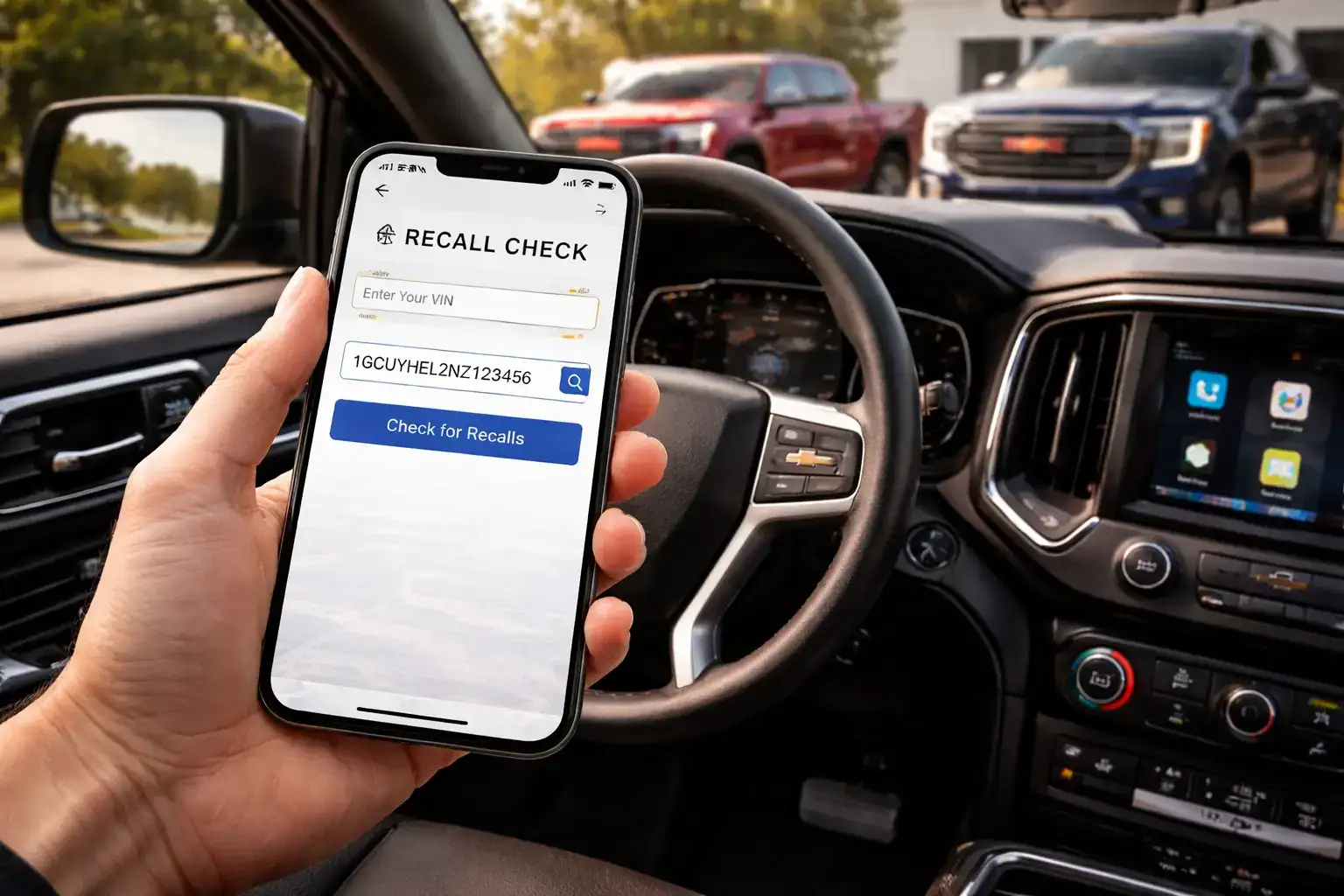
A vehicle recall is one of those things most owners hope they never have to deal with, and one of the most important things to check for when buying a used vehicle. Recalls represent safety or compliance issues that the manufacturer is required to repair at no charge to the owner, and an unaddressed recall on your vehicle is a risk you are carrying every day you drive it. The process for checking recalls is straightforward, takes less than five minutes, and requires nothing more than your Vehicle Identification Number and internet access.
This guide walks through the complete process for checking Chevrolet and GMC vehicle recalls: what a recall is, how to use the official NHTSA and GM Owner Center tools, what to do when you find an open recall, how to read your VIN, and how to schedule recall service at Starling Chevrolet in St. Cloud. Whether you own a current-model Silverado, a used Traverse, or any Chevrolet or GMC vehicle from the past decade, this process applies to you.
What Is a Vehicle Recall?
A vehicle recall is an official notification from the vehicle manufacturer or the National Highway Traffic Safety Administration (NHTSA) that a specific vehicle, component, or equipment does not comply with federal safety standards or contains a defect that poses an unreasonable risk to safety. Recalls are mandatory, unlike Technical Service Bulletins (TSBs), which are manufacturer guidance documents for known issues, recalls carry a legal obligation for the manufacturer to remedy the defect at no charge to the vehicle owner.
Recalls can cover an enormous range of issues: a fuel system component that poses a fire risk, an airbag inflator that may deploy incorrectly, a software error in the brake control module, or something as seemingly minor as a missing page in the owner’s manual that prevents the vehicle from meeting a specific federal safety standard. Not all recalls are equally urgent, a recall for a seat belt latch that could fail under specific conditions has different urgency than a recall for an infotainment software issue. When you receive a recall notice or discover an open recall, reading the specific description tells you how urgent the repair is and what the risk is if the vehicle continues to be driven.
Step-by-Step: How to Check for Recalls on Your Chevy or GMC
The recall check process requires your VIN, the 17-character Vehicle Identification Number that identifies your specific vehicle. Your VIN is printed on a metal plate visible through the lower corner of the driver’s side windshield, on a sticker on the driver’s side door jamb, and on your vehicle registration and insurance documents. With your VIN in hand, you have two primary recall lookup tools available: the NHTSA national database and GM’s own Owner Center.
Both tools are free, require no account creation, and return results instantly. The NHTSA tool covers all manufacturers and all vehicles sold in the United States. The GM Owner Center provides additional information about GM-specific campaigns, extended warranties, and special service programs that may not appear in the NHTSA database. Using both tools together gives the most complete picture of your vehicle’s open recall status.
Using the NHTSA Recall Lookup Tool
Visit nhtsa.gov/recalls on any internet-connected device. Enter your full 17-character VIN in the search field and press the lookup button. The tool searches the federal database and returns a list of any open recalls associated with that specific vehicle. Each recall entry includes the recall campaign number, a description of the safety concern, the remedy description, and whether the recall repair has been completed on that specific VIN.
The NHTSA tool also shows complaints, investigations, and Technical Service Bulletins associated with your vehicle’s make, model, and year, information that is useful for understanding known issues even when no formal recall has been issued. For Chevrolet and GMC owners checking a used vehicle before purchase, running the NHTSA VIN check is a non-negotiable step. An open safety recall on a truck or SUV you are about to purchase is information you need before signing the paperwork.
Using the GM Owner Center
The GM Owner Center at my.gm.com provides recall lookup alongside a broader set of vehicle management tools for Chevrolet and GMC owners. After entering your VIN or creating an account and registering your vehicle, the Owner Center shows open recalls, available software updates, service reminders, and any special coverage programs, extended warranties or goodwill service campaigns, that GM may have made available for your specific vehicle.
The GM Owner Center is particularly valuable for understanding extended coverage programs. Occasionally GM will issue a special coverage program, not a formal recall, that extends warranty coverage on a specific component beyond the standard warranty period for vehicles affected by a documented concern. These programs appear in the Owner Center but may not always show up in the NHTSA database. For Chevrolet and GMC owners of vehicles that fall within a documented concern period, for example, the active fuel management system concerns documented on some 5.3L V8-equipped trucks, checking the Owner Center directly is worth the extra five minutes.
Most Common Chevrolet Recalls in Recent Years
Understanding the categories of recalls that have affected Chevrolet and GMC vehicles in recent years helps owners of those vehicles prioritize their recall checks. The most significant recall in terms of vehicle count in recent GM history involved brake vacuum pump failures on approximately 3.4 million trucks, including Silverado and Sierra models from the third generation (2014-2019). This recall addressed a brake vacuum pump defect that could reduce braking effectiveness, a safety-critical concern that any third-generation Silverado or Sierra owner should verify has been completed on their specific vehicle.
More recently, in 2026, GM issued a recall affecting a broad range of 2025-2026 model year vehicles, related to a radio configuration issue that prevented the electronic owner’s manual from downloading correctly during production. While this recall does not affect vehicle safety in operation, it is a compliance issue under Federal Motor Vehicle Safety Standard 208 that GM is required to remedy. Owners of affected 2025-2026 vehicles should check their VIN at nhtsa.gov to confirm whether the remedy has been applied to their specific vehicle. This example illustrates that not all recalls involve imminent safety risks, some involve compliance issues that require straightforward software or documentation updates.
What Happens When Your Vehicle Has a Recall?
If a recall check reveals an open recall on your vehicle, the process for resolution is straightforward: schedule a service appointment at any GM-certified dealership, including Starling Chevrolet in St. Cloud, and the recall repair will be performed at no charge to you. This applies regardless of where you purchased the vehicle, how old the vehicle is, or whether the vehicle is still under its original warranty. Recall repairs are manufacturer obligations that do not expire.
When you bring your vehicle in for recall service, the certified technicians will perform the specific repair or modification described in the recall campaign. For software-related recalls, the remedy is typically a software update that takes less than an hour. For mechanical recalls, the repair time depends on the specific component, a brake vacuum pump replacement, for example, requires more time than a software update. Our service team at Starling Chevrolet can give you an estimated service time when you schedule your appointment.
Is Recall Service Free?
Yes. Recall repairs are performed at no charge to the vehicle owner, with no exceptions. This is not contingent on whether you purchased the vehicle new or used, whether it is still under warranty, or how long ago the recall was issued. If your vehicle has an open recall, the manufacturer is legally obligated to repair it at no cost through its authorized dealer network. At Starling Chevrolet, recall service is performed by our GM-certified technicians using genuine GM parts and GM-specified repair procedures, the same standard applied to any warranty repair.
The only cost consideration for recall service is time: depending on the nature of the recall and current service department appointment availability, completing the repair may require leaving your vehicle for part or all of a business day. Our service team can advise you on the expected time for your specific recall during scheduling. For recalls that involve a safety concern significant enough that you should not drive the vehicle until it is repaired, we can discuss options for accommodating your transportation needs during service, contact us directly to discuss your specific situation.
How Long Does a Recall Repair Take?
Recall repair time varies significantly based on the nature of the defect and the remedy. Software-related recalls, which have become increasingly common as modern vehicles rely on more software systems, typically require 30 minutes to two hours, often less. Mechanical recalls involving component replacement, a fuel pump, a seat belt mechanism, a brake component, may require two to four hours or more depending on parts availability and the complexity of the repair. Recalls involving inspection-and-replace procedures, where technicians must inspect the component before determining whether replacement is needed, add variable time based on inspection findings.
When you schedule your recall service appointment at Starling Chevrolet, provide the recall campaign number from the NHTSA lookup, this allows our service team to confirm parts availability and give you an accurate time estimate before your appointment. Scheduling recall service in advance, rather than arriving without an appointment, typically results in faster service and more predictable scheduling for your day.
How to Read Your Chevrolet VIN Number
Your Vehicle Identification Number is a 17-character alphanumeric code that encodes specific information about your vehicle’s origin, manufacturer, model, features, and production sequence. Understanding what each section of your VIN means is useful for verifying vehicle information, confirming your vehicle is the one you intend to look up, and understanding how the recall database identifies your specific configuration. The VIN is standardized across all manufacturers in the United States, with a consistent structure defined by federal regulation.
For Chevrolet and GMC vehicles, the VIN structure follows the industry standard: characters 1 through 3 identify the World Manufacturer Identifier (WMI), which tells you where the vehicle was manufactured and by which brand. Characters 4 through 8 describe the vehicle’s attributes, model, body style, engine code, and restraint systems. Character 9 is a check digit used to verify the VIN’s validity. Character 10 identifies the model year, for 2026 vehicles, the character is ‘T’. Character 11 identifies the assembly plant. Characters 12 through 17 are the sequential production number that makes each VIN unique.
Decoding the Most Important VIN Positions
For Chevrolet vehicles, the first character is typically ‘1’ (assembled in the United States) or ‘2’ (assembled in Canada). The second character ‘G’ identifies General Motors as the manufacturer. The third character identifies the division: ‘C’ for Chevrolet, ‘1’ is sometimes used for Chevrolet trucks. For GMC vehicles, the first three characters typically begin with ‘1GK’ or ‘1GT’ depending on the vehicle type. The fifth character often encodes the engine type, which is useful when cross-referencing your vehicle against engine-specific TSBs or recall campaigns.
You do not need to memorize VIN structure to use recall lookup tools, both the NHTSA tool and GM Owner Center do the decoding automatically when you enter your full 17-character VIN. However, understanding the structure helps you quickly verify that the VIN you are entering matches the vehicle you intend to look up, which matters when buying a used vehicle and verifying that the VIN on the door sticker matches the VIN in the seller’s documentation. Any discrepancy between VINs on the same vehicle is a significant red flag that should be investigated before purchase.
Schedule Your Recall Service at Starling Chevrolet
Starling Chevrolet in St. Cloud is a GM-certified dealership with the trained technicians, diagnostic tools, and genuine GM parts required to perform recall service correctly on any Chevrolet or GMC vehicle. When you bring your vehicle to our service department for a recall repair, the work is done to GM’s specifications by technicians who have received manufacturer training on the specific systems and repair procedures involved. This matters for recall repairs because the remedy must be performed correctly to eliminate the safety concern, a recall repair done incorrectly or incompletely does not protect you.
Scheduling your recall service is straightforward. Visit our website to schedule online, call our service department directly, or stop by our location in St. Cloud. When you schedule, have your VIN and the recall campaign number from the NHTSA lookup ready, this allows our team to confirm parts availability and give you an accurate service time before your appointment. If your recall check reveals an urgent safety concern, contact us immediately so we can prioritize your service appointment.
FAQs
Can I check recalls on a vehicle I’m about to purchase?
Yes, and you absolutely should. The NHTSA recall lookup at nhtsa.gov is available to anyone with a VIN, you do not need to own the vehicle to check its recall status. Before purchasing any used Chevrolet or GMC vehicle, run the VIN through the NHTSA lookup to identify any open recalls. An open recall is not necessarily a reason to avoid the vehicle, but it is information you need: it affects how you negotiate the price, whether you should have the recall repaired before taking delivery, and what your first service appointment will involve.
At Starling Chevrolet, we disclose open recall status on the used vehicles we sell and can perform recall repairs before or at delivery for eligible vehicles. If you are purchasing a used Chevrolet or GMC from a private seller, request the VIN before the test drive and run the NHTSA check on your own time, not under the pressure of a seller waiting for your decision.
What if parts are not available for my recall repair?
Parts shortages occasionally delay recall completion, particularly for recalls involving large numbers of vehicles or specialized components. If parts are not currently available when you schedule your recall service, our service team will place your vehicle on a notification list and contact you as soon as the parts arrive. In some cases, GM provides interim guidance for owners whose recall parts are on backorder, this guidance may include driving restrictions or interim safety measures. The NHTSA recall entry for your specific campaign will indicate whether an interim remedy is available while permanent parts are sourced.
Do not let parts availability uncertainty prevent you from scheduling the appointment and getting your vehicle into the service queue. The sooner your VIN is registered for the recall repair in our system, the earlier you will be notified when parts arrive.
Conclusion
Checking for open recalls on your Chevrolet or GMC vehicle takes less than five minutes and requires nothing more than your VIN and access to nhtsa.gov. It is one of the most straightforward and highest-value vehicle maintenance actions available to any owner, it costs nothing, takes minimal time, and ensures you are not driving a vehicle with a known safety issue that the manufacturer is required to fix at no charge. For used vehicle buyers, it is a non-negotiable step in the purchase process.
At Starling Chevrolet in St. Cloud, our service department is equipped to handle recall repairs for any Chevrolet or GMC vehicle with GM-certified technicians and genuine GM parts. Whether your recall is a routine software update or a more significant mechanical repair, we perform the work correctly and completely so you can drive with confidence.

0 comment(s) so far on How to Check for Chevrolet and GMC Recalls Using Your VIN