




Apple CarPlay & Android Auto Return to the 2027 Chevy Silverado: GM’s Big Reversal Explained
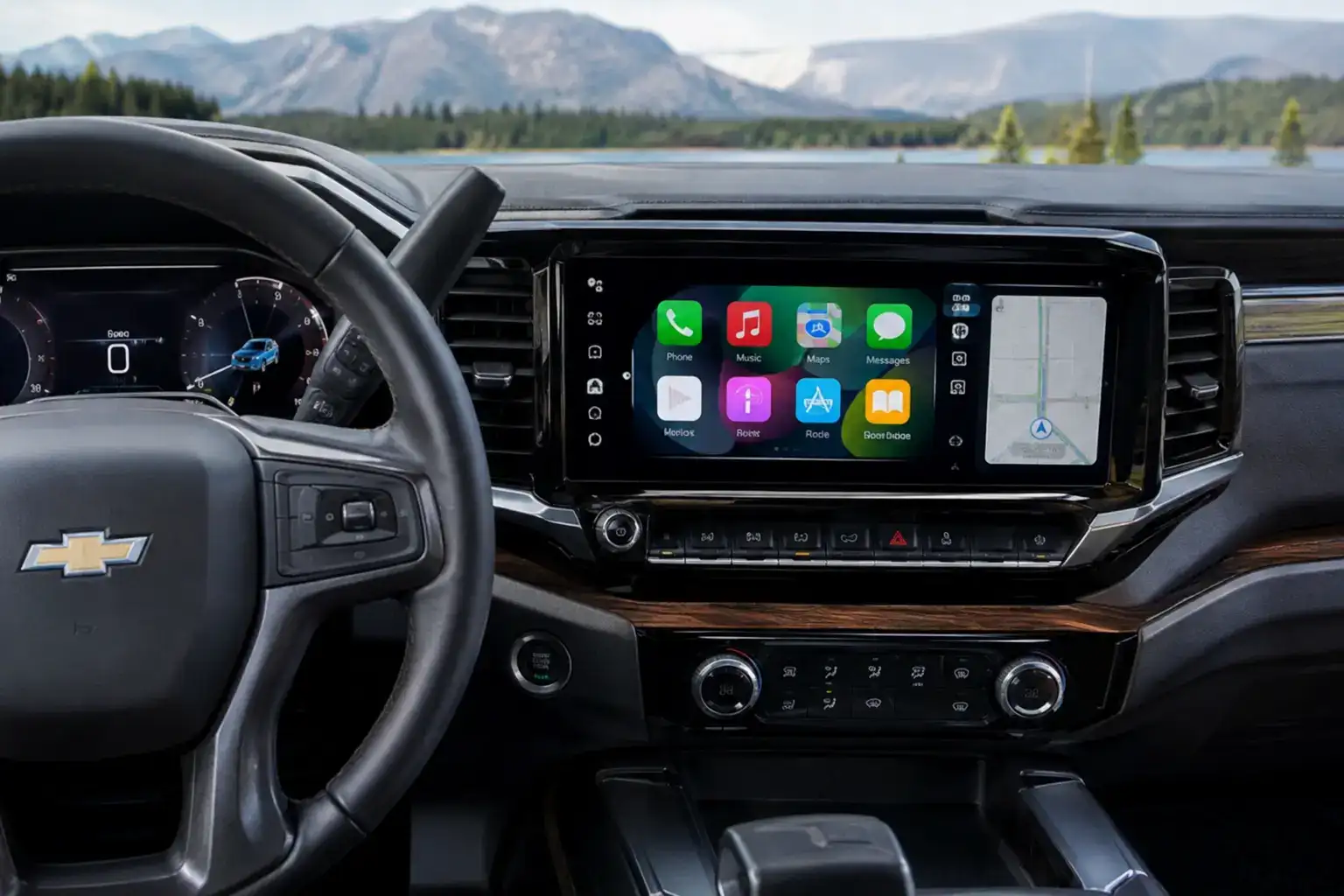
In September 2026, General Motors made an announcement that surprised the automotive world: Apple CarPlay and Android Auto are coming back. After years of insisting it would build its own connected-car ecosystem and phase out third-party phone integration entirely, GM reversed course, and the 2027 Chevrolet Silverado is first in line to get the restored features. If you were holding off on a new truck because of this issue, here is everything you need to know about what changed, how the new system works, and what to expect at the dealership.
GM Changes Course: What Just Happened and Why
General Motors spent years investing in its own in-vehicle software platform. In 2023, the company announced it would stop offering Apple CarPlay and Android Auto in its electric vehicles, citing a desire to deliver a more integrated native experience. CEO Mary Barra later signaled that the removal would extend to all GM vehicles, not just EVs. That plan, once presented as a firm strategic commitment, has now been abandoned.
On September 15, 2026, GM announced it would bring both Apple CarPlay and Android Auto back, starting with the 2027 Silverado and 2027 GMC Sierra. The decision was driven in large part by customer data. A study cited by GM found that 55 percent of Apple CarPlay users called the absence of the feature a dealbreaker when purchasing a new vehicle. A study by American Trucks found that 55 percent of CarPlay users call the absence of the feature a dealbreaker on a new vehicle, with 36 percent saying the same about Android Auto. Among GM owners specifically, 42 percent said losing either was a non-starter. For a vehicle with the Silverado’s volume, those numbers were too significant to ignore.
The reversal signals that GM, like Ford and Ram before it, has concluded that fighting against CarPlay and Android Auto is a losing battle. Customers want their phone apps, their maps, and their music wherever they go, and they are willing to walk away from their preferred brand to get it. The announcement came roughly three years after GM first signaled its intent to build an alternative, which means a significant portion of Silverado buyers purchased trucks without phone integration during that window. For many of them, the 2027 represents a welcome return to a feature they relied on daily.
Which 2027 Chevy Models Get CarPlay and Android Auto Back
2027 Silverado 1500 Is First — Other Chevys to Follow
The 2027 Chevrolet Silverado 1500 is the launch vehicle for the restored integration. GM announced at the same time that it plans to extend the feature across its wider lineup, prioritizing its highest-volume models first. The 2027 GMC Sierra is also confirmed. While the company has not published a complete schedule for other nameplates, the expectation within the industry is that other 2027 Chevrolet trucks and SUVs will follow within the same model year cycle.
If you are asking about the Equinox, Traverse, Tahoe, Suburban, Colorado or the Blazer EV: GM has not confirmed phone projection for any of them. The company has said the new interface will expand across its broader portfolio, starting with its highest-volume vehicles, but it has published no model-by-model schedule, and it clarified after the announcement that no decision has been made on implementation in other vehicles. Competitive pressure from Ford, Ram and Toyota makes a wider rollout likely, but likely is not confirmed. Ask your Starling Chevrolet St. Cloud sales consultant what is actually confirmed for the vehicle and purchase window you have in mind, and buy the truck in front of you for what it has today, not for what may arrive later.
How the New Split-Screen Interface Actually Works
One important distinction about GM’s restored integration: this is not the same CarPlay and Android Auto implementation you may remember from previous Silverado models. GM has developed a new split-screen interface in which your phone’s CarPlay or Android Auto display appears as a card within the larger infotainment screen, rather than replacing it entirely. This is a deliberate design decision, and it has real implications for how you interact with the truck. GM built the new interface in collaboration with Apple and Google rather than bolting projection back onto the old system, which is why the layout behaves as a shared screen instead of a takeover.
The result is that GM’s own vehicle information stays visible while you use your phone’s apps. Climate controls, trip data, trailer monitoring, and other truck-specific functions remain on screen at all times. Built-in apps that work without a phone connection, including the native navigation and GM’s streaming content options, remain available and accessible. CarPlay and Android Auto effectively live alongside the truck’s own software rather than replacing it. For drivers who prefer Apple Maps or Google Maps for navigation but still want to monitor tire pressure, trailer status, or fuel range from the same screen, this layout is a genuine improvement over the old full-screen takeover approach.
The system also supports over-the-air updates, which means GM can continue developing and improving the integration after the truck leaves the factory. The 2027 Silverado’s infotainment is built around a standard 16.3-inch center display and 12.2-inch driver information screen, giving the split-screen layout plenty of real estate to work with. The home screen also has a default split view that pairs vehicle information with a full-size map, so the layout applies to GM’s own software and not only to phone projection. Both displays are updated for the 2027 model, providing sharper graphics and improved responsiveness compared to the outgoing generation.
Phone Mirroring Alongside Trailering, Super Cruise, and Vehicle Data
For Silverado drivers who use their truck for serious work, the split-screen approach offers a meaningful advantage over the old implementation. When you are towing and have your trailer monitoring app or Chevy’s integrated Trailering app on screen, you no longer have to choose between that data and your phone’s navigation. Both can be visible simultaneously. The same applies to Super Cruise data and any other vehicle-specific display the system is running. For a contractor towing a work trailer into an unfamiliar area, or a boat owner navigating to a new launch ramp while monitoring trailer brake status, this layout addresses a real daily frustration.
For drivers who had stopped using CarPlay or Android Auto because they relied on GM’s trailering features, the new layout eliminates the tradeoff that made the old implementation difficult. You get your phone apps without giving up the truck features that make the Silverado useful. The integration also works wirelessly for both Apple CarPlay and Android Auto, removing the need to plug in your phone each time you enter the vehicle.
What GM Has and Hasn’t Said About CarPlay on Chevy EVs
GM’s EV vehicles, including the Silverado EV and the Blazer EV, run on the company’s Ultifi software platform. These were the models most prominently affected by GM’s original decision to drop CarPlay and Android Auto, and they have been the source of the most customer frustration. Silverado EV buyers in particular found themselves with a full-size truck featuring exceptional range and performance but lacking a feature present in inexpensive used cars from a decade ago.
GM has not confirmed that the restored integration is coming to its electric vehicles. The Silverado EV and Blazer EV were the models that lost phone projection first, which makes them the real test of how far this reversal goes, and GM has specifically said no decision has been made for them. An over-the-air delivery would be technically plausible, since the new interface supports OTA updates, but GM has not committed to it and existing owners should not count on it. If you are considering an electric Chevy and phone integration matters to you, treat it as unavailable until GM says otherwise, and ask us what is confirmed on the day you buy.
The Customer Backlash That Drove the Reversal
GM’s original decision to remove CarPlay and Android Auto was motivated by a belief that it could build a better, more profitable native software experience. The company invested substantially in its own maps, streaming services, and in-vehicle app ecosystem. The problem was that customers, particularly in the truck segment, were not convinced. Truck buyers tend to be practical and brand-loyal, and they were vocal about the fact that they used CarPlay and Android Auto every day and had no interest in learning a new navigation system or streaming service tied to their vehicle.
Social media commentary following the announcements was largely negative. Lease return data and conquest sales reports from competitors who retained CarPlay, including Ford, Ram, and Toyota, indicated that GM was losing buyers on this issue in a segment where every conquest matters. Third-party surveys corroborated what dealers were hearing on showroom floors: buyers who would otherwise have chosen a Silverado were cross-shopping the F-150 and Ram 1500 specifically because of phone integration.
The American Trucks study that influenced GM’s reversal put a number on what had been anecdotal: 42 percent of GM’s own owners said they would consider switching brands over phone integration. In a market where Silverado competes against the Ford F-150, Ram 1500, Toyota Tundra, and now a broader lineup of capable trucks from across the industry, that is a competitive disadvantage GM was no longer willing to absorb. The reversal is a direct acknowledgment that customer loyalty in the truck segment is built on practical utility, and forcing customers to give up a daily-use feature in exchange for GM’s own ecosystem was not a trade they were willing to make.
Should You Wait for a 2027 Silverado to Get CarPlay Back?
If Apple CarPlay or Android Auto is a priority for you and you are currently driving a 2023, 2024, or 2025 Silverado without the feature, the answer is that the 2027 model is worth waiting for, depending on your timeline. Production of the 2027 Silverado 1500 is underway, with trucks expected to reach dealers in the coming months.
Keep in mind that the 2027 Silverado brings significantly more than just restored phone integration. The new model introduces the 5.7-liter V8 at 402 horsepower and 428 lb-ft, which tows up to 13,700 lbs, the 6.6-liter V8 at 481 horsepower and 501 lb-ft, an updated 2.7-liter TurboMax four-cylinder now paired with the 10-speed automatic, and the returning 3.0-liter Duramax diesel, alongside a standard 16.3-inch center display and Super Cruise with hands-free towing. The seven-trim lineup spans from Work Truck through High Country, covering every buyer from commercial fleet to luxury. If you are in the market for a new truck and have been waiting specifically because of CarPlay, the 2027 is a meaningful upgrade over the outgoing generation on multiple fronts simultaneously.
If you need a truck now and cannot wait, the current 2026 Silverado 1500 remains available and represents excellent value, particularly with current incentives. The 2026 model is a capable, well-equipped truck in its own right. Talk to your consultant at Starling Chevrolet St. Cloud about what makes sense for your timeline and budget. In some cases, a 2026 at a favorable price point will make more financial sense than waiting several months for a 2027. In others, the specific new features of the 2027, including the new V8 engines and restored CarPlay, justify the wait.
What to Expect at the Dealership When You Pick Up Your 2027 Silverado
When you take delivery of a 2027 Silverado equipped with the new CarPlay and Android Auto integration, the setup process is straightforward. The system uses wireless pairing for both Apple and Android devices, so you connect your phone once and the truck remembers it for future trips. GM recommends keeping your phone’s software updated to ensure full compatibility with the split-screen interface, as newer versions of iOS and Android may enable additional features as they are developed.
Your delivery specialist at Starling Chevrolet St. Cloud will walk you through the new layout during the delivery orientation: where phone projection sits on screen, which vehicle readouts stay visible beside it, and how the native navigation and built-in apps work when no phone is connected. Because the system takes over-the-air updates, bring any questions about behavior that changes after delivery back to us.
See the 2027 Chevy Silverado at Starling Chevrolet St. Cloud
Starling Chevrolet St. Cloud is your local resource for the latest on the 2027 Silverado and the return of CarPlay and Android Auto to the Chevy lineup. Our team stays current on GM’s rollout schedule and can tell you exactly which models and trim levels have confirmed availability for your purchase window.
Stop by our dealership in St. Cloud, Florida, browse our inventory online, or give us a call to get on the list for an incoming 2027 Silverado. Whether you are a current Chevy owner who left because of the phone integration issue or a first-time buyer looking for a full-size truck with modern technology, we are ready to help you find the right configuration for your needs.
Conclusion
GM’s reversal on Apple CarPlay and Android Auto is one of the most significant shifts in automotive technology policy in recent years. After years of investment in its own software ecosystem and public statements that third-party phone integration was not part of its future, the company responded to customer data and walked back its position. The 2027 Chevrolet Silverado is the first beneficiary, with other models to follow.
The new split-screen implementation is not a simple reinstatement of the old system. It is a more thoughtful approach that keeps GM’s vehicle-specific data visible while giving customers the phone apps they use every day. For Silverado buyers, that means you no longer have to choose between your truck’s trailering tools and your phone’s navigation. For the Chevy lineup as a whole, it signals that GM has recalibrated its software strategy around what customers actually want. If you have been waiting for this moment, the 2027 Silverado is ready.

0 comment(s) so far on Apple CarPlay & Android Auto Return to the 2027 Chevy Silverado: GM’s Big Reversal Explained